
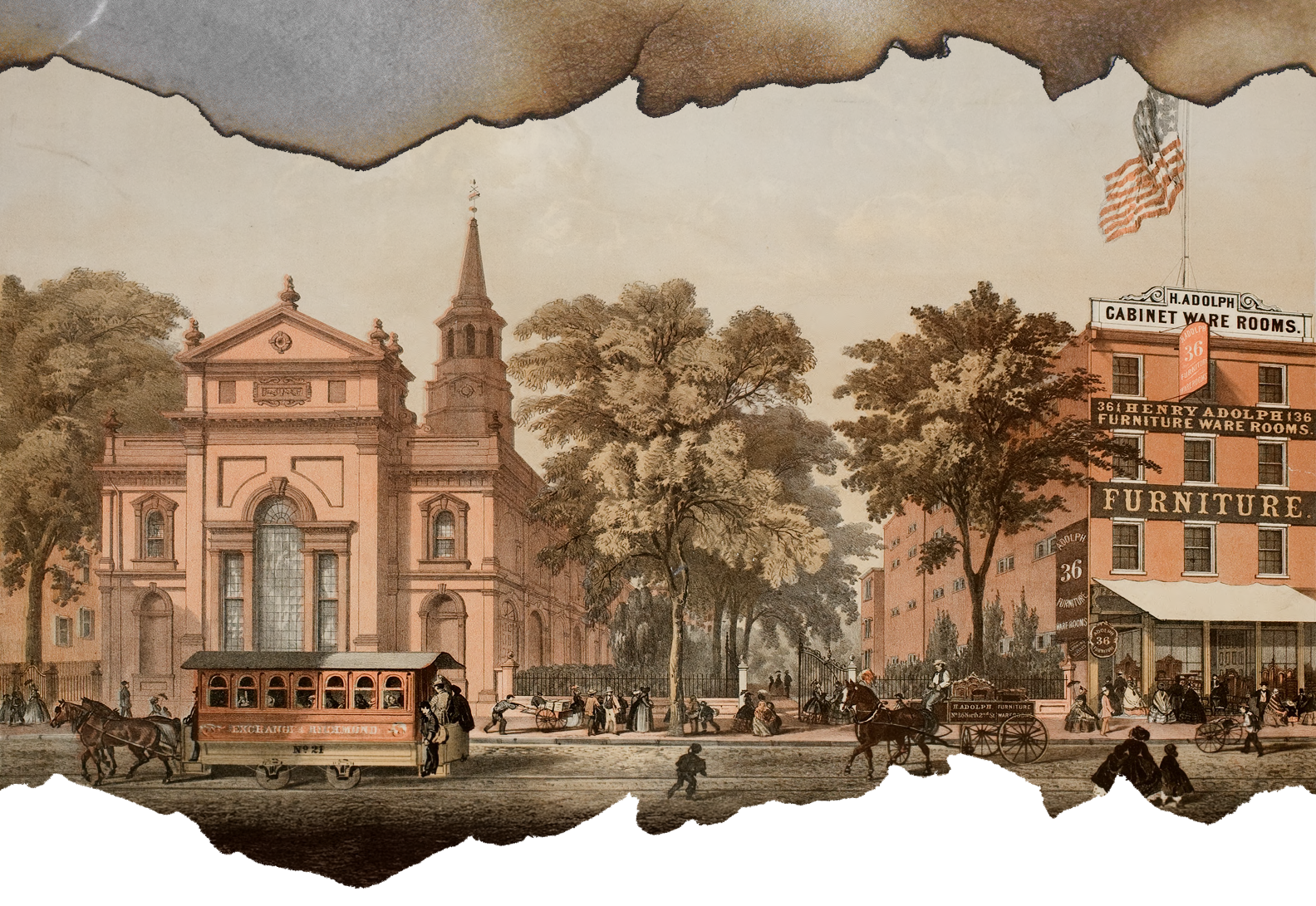

When William Penn issued his Charter of Liberties in 1701, it led to the flourishing of many different houses of worship in Philadelphia, including Jewish, Roman Catholic, Quaker, and Protestant communities. This idea was part of the rapid growth of Philadelphia. We will see many of their houses of worship together and tell their stories in the City of Brotherly Love.
Let’s take this tour together and learn about religion in Philadelphia during the time of the Revolution!



2 hours. This is an outdoor walking tour; distance will be about 23 city blocks.
6th & Market Streets, at the Independence Visitor Center, Market Street (south) entrance.
We will visit Mikveh Israel Jewish Synagogue, “the oldest formal congregation in Philadelphia and the oldest continuous synagogue in the United States.” Member Haym Solomon was the second financier of the American Revolution, after Robert Morris.
We will stand at St. Joseph’s Roman Catholic Church, tucked away in an alley to avoid attention, because it was the only place in the entire English-speaking world at the time where public Roman Catholic Mass in Latin was permitted by law. We will see the little Free Quaker Meeting House, started by those few Quakers who supported fighting in the American Revolution.
We will walk by Christ’s Church, where George Washington and Betsy Ross had dedicated pews. We’ll make note of Gloria Dei, the only building in Philadelphia still standing which hosted William Penn.
We’ll read the marker for Rev. John Gloucester, who escaped enslavement in Tennessee and became the founder of the African Presbyterian Church here in Philadelphia. We’ll stop in front of Mother Bethel AME Church, founded by Reverend Richard Allen in a converted Blacksmith shop, which has become a denomination in multiple countries. We’ll look at the marker for St. Thomas African Episcopal Church, founded by Reverend Absalom Jones in line of sight of Independence Hall.
We’ll also visit the Liberty Bell, which was cast to celebrate the 50th anniversary of William Penn’s Charter of Liberties, and reflected the biblical year of jubilee when indebted lands and indentured servants were set free.




